Aquaphor Moisturizing Cream Review: Not the Ointment, and That Changes Everything

Aquaphor moisturizing cream jar on a stone step in morning light beside a small plant

1. The Hook: Why This Aquaphor Moisturizing Cream Review Starts With a Warning

You searched for an aquaphor moisturizing cream review because the shelf confused you. Three jars, one name, and no clear answer about which belongs on your face. Your skin feels tight by midday, your face cream runs out first, and the heavy ointment feels wrong in daylight. What if the confusion itself is the problem, and the cream you actually need is the one nobody explains? Keep reading, because the first thing to clear up is the mistake almost everyone makes.

Aquaphor Moisturizing Cream Review, white jar with blue lid on a stone tray in warm window light

See Price and Reviews

Best for: a reader with dry, sensitive skin who wants one fragrance-free cream for face and body.

Watch out for: some buyers find the finish tacky once dry, so feel is the open question.

Bottom line: a simple daily cream that clears the ointment confusion and covers face and body in one step.

2. The Problem, Felt

You know the midday feeling. You moisturized in the morning, and by lunch your cheeks feel tight again, as if the cream gave up halfway through the day. Then there is the two-product shuffle. One jar for the face, another for the body, and both run out on different days. When you reach for the Aquaphor name, the choice gets worse. The ointment, the lotion and the cream all wear the same label, and nobody explains the difference. So you buy the one you already know, even when it feels too heavy for daylight. What if the right jar was the one you walked past?

A bathroom shelf in cold winter light with the Aquaphor cream jar waiting beside a folded towel

3. The Reveal

This is the Aquaphor Moisturizing Face and Body Cream with Hyaluronic Acid, in the 16 oz jar, an aquaphor moisturizing cream for dry sensitive skin, built for daily face and body use. It arrived as the brand’s first daily cream line in August 2026. The idea is simple. One jar, face and body, morning and night, with a 48-hour hydration claim from a breathable moisture layer. The brand explains that the cream is clinically tested to strengthen the skin’s moisture barrier, and that it stays non-sticky, non-greasy and fast-absorbing. The label carries no fragrance, parabens, dyes or silicones, and it is hypoallergenic and non-comedogenic. So what does the work inside the jar? The answer sits in one number on the label, and most readers read it wrong.

Tap any photo in this article to see the current price, rating and reviews for yourself.

4. What Sets It Apart

Four details decide whether this jar earns its place on your shelf, and each one is easy to misread.

Aquaphor Moisturizing Cream Ingredients: The 9% Explained

The jar says 9%, and most readers assume it means 9% hyaluronic acid. It does not. The 9% is a blend of hyaluronic acid, 3 ceramides, shea butter and glycerin. As a hyaluronic acid moisturizing cream, it draws moisture in, while ceramides support the barrier. Think of the barrier as a brick wall. Skin cells are the bricks, and ceramides are the mortar.

Close macro of the Aquaphor cream jar label showing the 9 percent badge and blue lid

Aquaphor Cream vs Healing Ointment: The Line That Matters

Here is the line that matters. The Healing Ointment is 41% petrolatum, built to protect dry, chapped or irritated skin and minor cuts, scrapes and burns. This cream has no petrolatum at all. It is a daily moisturizer, not a repair ointment, so it can sit on your face in daylight without the heavy seal.

Aquaphor Moisturizing Cream for Face: What the Brand Actually Says

The brand’s FAQ answers the face question plainly. Yes, this cream suits face and body for daily use on dry, sensitive skin, and it can also serve as a hand or foot cream. As an aquaphor moisturizing cream for sensitive skin, it skips fragrance, parabens, dyes and silicones, and it carries National Eczema Association acceptance on the label.

Aquaphor Moisturizing Cream vs CeraVe: The Honest Comparison

The comparison everyone makes is with CeraVe, so here it is on verified rows only, with no winner declared.

Aquaphor Moisturizing CreamCeraVe Moisturizing CreamVanicream Moisturizing Cream
FormCreamCreamCream
Key ingredients9% blend of hyaluronic acid, 3 ceramides, shea butter and glycerin3 ceramides, hyaluronic acid and petrolatumPetrolatum and sorbitol
Face and body useYesYesYes
Hydration claim48 hours24 hoursNot stated
Free ofFragrance, parabens, dyes, siliconesFragrance, parabensFragrance, dye, lanolin, parabens, botanical extracts
NEA acceptanceYesYesYes

One jar covers face and body, morning and night, so the routine is one step, not two.

Pros:

  • One jar covers face and body, so the routine is a single step.
  • 48-hour hydration claim from a breathable layer, backed by a clinical test of 30 participants.
  • 9% blend of hyaluronic acid, 3 ceramides, shea butter and glycerin.
  • Hypoallergenic, non-comedogenic, free of fragrance, parabens, dyes and silicones.
  • National Eczema Association acceptance on the label.

Cons:

  • Some buyers describe a tacky finish once dry, while others find it absorbs quickly.
  • A few buyers find it runny coming out of the tube.
  • Launched in August 2026, so the track record is only a few months long.
  • No petrolatum, so readers who want the classic occlusive seal will find it lighter than expected.

If the label matches what your shelf is missing, see the cream on the product page and check it with your own eyes.

5. What Buyers Are Saying

Every one of the ten buyers below had something kind to say, and every one received the cream as a free sample through a promotion. The counterweight is the texture split other buyers report.

Cammy T: “I liked that this cream is gentle and moisturizing. It doesn’t irritate and provides hydration.”

Gianna B: “This cream is very hydrating and keeps my skin soft all day long”

Sara B: “Amazing stuff!!!!! My hands and feet feel amazing.”

Lauren D: “Aquaphor Moisturizing Cream is a good product. It is not very thick.”

Tiffany S: “It is very moisturizing, and it has a very non greasy texture”

Tine W: “I love all of these products from this company. Highly recommend.”

Ayanna R: “The cream is nice and thick, so it’s very moisturizing on your skin.”

Rodney S: “I use this brand on my daughter skin love it works great”

Lennon H: “You really cannot ever go wrong with aquaphor. This is going to leave you moisturized time and time again.”

Georgina K: “This is my favorite moisturizing cream by far. I have very dry skin and it really helps.”

So the praise is real, and the sample flag is real too. Feel is the one thing to test yourself.

The Aquaphor cream jar on a bedside table in the evening, a calm nightly routine scene

The photos below show the jar up close, so tap one to see the current price, rating and reviews for yourself.

6. Is This Made for You?

Built for people who:

  • want one cream for face and body, not two jars.
  • have dry, sensitive skin and want fragrance-free care.
  • prefer a richer cream that still absorbs fast.
  • want a simple routine with no second step.

Not built for people who:

  • want the heavy seal of the classic ointment.
  • want a cream with years of history behind it.

If a long track record and a petrolatum seal matter most, a petrolatum-rich cream with years behind it fits better, such as the CeraVe Moisturizing Cream reviewed here.

One tap on any photo takes you to the product page, where the current price, rating and reviews are waiting.

People Also Ask About aquaphor moisturizing cream review

Can I use Aquaphor Moisturizing Cream on my face?

Yes. The brand’s FAQ says this cream suits face and body for daily use on dry, sensitive skin. It is hypoallergenic and non-comedogenic. If your skin is reactive, the American Academy of Dermatology advises a patch test twice a day for 7 to 10 days first.

How is Aquaphor Moisturizing Cream different from Aquaphor Healing Ointment?

The ointment is a petrolatum skin protectant for dry, chapped or irritated skin and minor cuts, scrapes and burns. The cream is a daily moisturizer with no petrolatum, built around a 9% blend of hyaluronic acid, 3 ceramides, shea butter and glycerin.

Does it work for acne-prone skin?

The brand states the cream is non-comedogenic, which means it is made not to clog pores. It is also fragrance-free and hypoallergenic. Even so, the American Academy of Dermatology advises a patch test twice a day for 7 to 10 days before using any new product more widely.

What if it feels tacky on my skin?

Feel is the one thing buyers disagree on. Some describe a fast-absorbing, non-sticky finish, while others report a tacky feeling once dry. The smaller tube lets you test the texture before committing to the jar.

How this review was put together: Sources checked: the brand page, the full ingredient label, and 10 buyer reviews, read on 25 November 2026. We did not test this product; this review is built from verified label facts and 10 real buyer reviews, collected as part of a promotion with free samples.

7. The Close: What This Aquaphor Moisturizing Cream Review Leaves Open

The shelf stops confusing you once the line is clear. The ointment protects, the lotion lightens, and this cream does the daily work. So this aquaphor moisturizing cream review ends with a simple next step. If the 9% blend and the 48-hour claim match what your routine is missing, the only question left is one your own skin will answer. The jar is waiting on the product page, with its current price, rating and reviews. Tap the button below and see them yourself.

The Aquaphor cream jar on a bright bathroom counter in morning light, ready for the day

See Price and Reviews

Affiliate links: I may earn a commission at no cost to you.

Anti-Frizz Hair Serum: One Pump Tames the Frizz, Two Pumps Ruin It

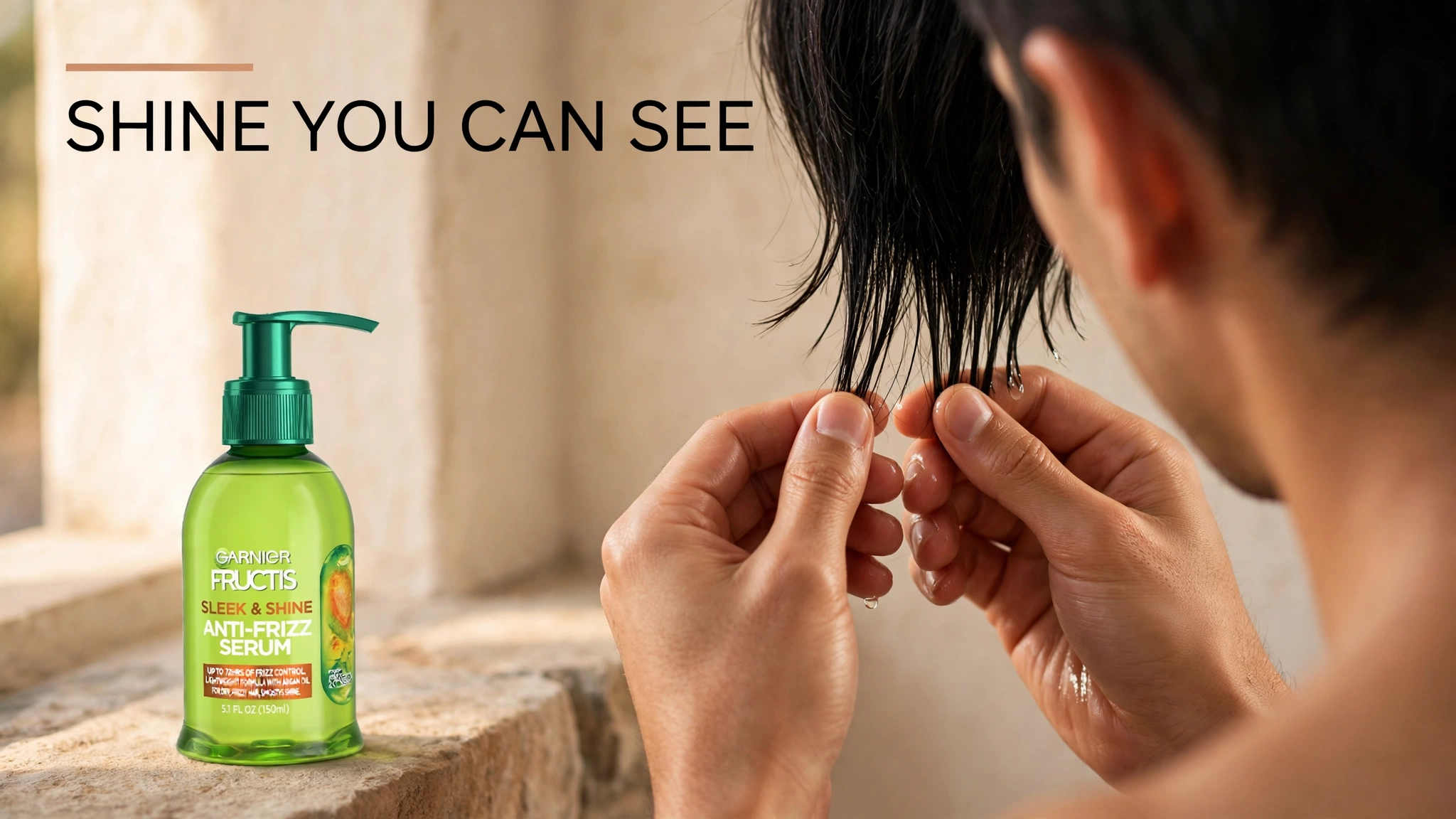
Garnier Fructis Sleek and Shine anti-frizz hair serum

1. The Hook

Your hair looked fine in the bathroom mirror. Then you stepped outside, and the humidity turned it into a halo of frizz. That is when an anti-frizz hair serum earns its place, or proves it never belonged there. This one makes a bold promise: smooth, shiny hair with frizz control that lasts up to three days. The fine print matters more than the promise. So does one pump really tame the frizz, or does it just trade frizz for grease?

Anti-frizz hair serum bottle on a stone shelf in warm window light

See Price and Reviews

Best for: dry, frizzy hair that puffs up in humidity, and anyone who wants a one-pump routine after washing.

Watch out for: the 72-hour figure needs the full system, not the serum alone; too much turns ends greasy, and this is not a heat protectant.

Bottom line: a light, pump-dosed smoothing serum that works when you use less than you think.

2. The Problem, Felt

You know the pattern. You wash, you dry, you smooth every strand into place, and for ten minutes your hair behaves. Then the air gets to it. The ends lift, the crown goes fuzzy, and the little flyaways stand up like they heard something surprising. A ponytail does not help, because the flyaways escape anyway, and brushing only makes the halo bigger. Dry air in winter is no kinder: hats and heated rooms pull the moisture out, and static takes over. The frustration is not vanity. It is the feeling that your hair has a mind of its own. What if the fix is not a stronger product, but a smaller amount of the right one?

Green anti-frizz serum bottle beside a steamy bathroom mirror on a humid morning

3. The Reveal

The product is Garnier Fructis Sleek and Shine Anti-Frizz Serum, a leave-in anti-frizz serum for dry, frizzy hair. The formula pairs Moroccan argan oil with a plant-based amino acid system the brand calls Vegan Kera System, and a silicone base that coats each strand in a thin, water-repelling film. That film is the whole idea: humidity cannot enter the shaft, so the cuticle stays flat. The bottle is a green pump, 5.1 fl oz, and this link is the two-pack. It is free from parabens, phthalates and DMDM hydantoin. The scent is crisp apple, strawberry and melon. How to use hair serum for frizzy hair comes down to dose. Tap any photo to see the current price, rating and reviews for yourself.

4. What Sets This Anti-Frizz Hair Serum Apart

In plain terms, this is a frizz control serum for dry frizzy hair, and four smaller things decide whether it works for you.

An argan oil hair serum that stays light

Argan oil usually means weight. Here the oil sits inside a lightweight silicone base, so the formula spreads thin and dries without a coating you can feel. The argan oil softens the strand, while the silicone film blocks humidity. Think of it as a raincoat, not a blanket.

Hair serum for flyaways: the dry-hair touch-up

The pump is not only for wash day. A pea-size amount, warmed between your palms and smoothed over the ends, tames the flyaways that escape a ponytail. Do not rinse it out, and keep it off the roots.

How to use hair serum for frizzy hair without the grease

Dose by thickness, not by habit. One pump covers fine or short hair, two cover medium, and three to four cover thick or long hair. Rub your palms together first, then work it through damp or dry hair from the mid-lengths down.

The 72-hour number, read properly

Here is the honest part: the 72-hour figure covers the full system, shampoo, conditioner and serum together, even in 97% humidity. Judge it as an anti-frizz serum for humidity, not as a repair treatment. Treat 72 hours as a ceiling, not a promise.

The hair serum vs hair oil question comes up in almost every review thread, so here is the honest split.

This serumHair oilHumidity spray
FormLight liquid, pumpOil, drop by dropFine mist
Key ingredientArgan oil, silicone filmPlant oil, no siliconeCoating polymers
RoutinePump, rub, smooth ends, no rinseEnds only, for softnessMist over finished style
SupplyTwo 5.1 fl oz bottlesOne bottle, drops at a timeOne bottle, mist by mist

Two bottles in the pack, one pump per use: pump, rub, smooth, done.

Pros:

  • Pump dosing by hair thickness, one to four pumps
  • Silicone film plus argan oil
  • Works on damp or dry hair, with no rinse step
  • Free from parabens, phthalates and DMDM hydantoin
  • Two bottles in the pack

Cons:

  • The 72-hour figure needs the full shampoo and conditioner system
  • Not a heat protectant, so heat styling needs a separate product
  • Silicone-based, so it does not suit a silicone-free routine
  • Strong fruity scent lingers until the next wash
Close view of the green pump bottle showing the Sleek and Shine label

If the dosing makes sense, see the current price and reviews.

5. What Buyers Are Saying

Seven of the ten buyers were happy; three had a reservation. Here are their exact words.

Lisa: “The only product I like to keep frizz at bay! It helps so much especially in the warmer months.”

FlorenciaT: “I think this product add a ton of hydration! I don’t know if I noticed a ton of frizz control”

YeymyD: “the scent is lovely, it leaves my hair feeling soft freeze free and super shiny”

Precious M: “Like how shiny and soft this makes my hair just kinda dislike how it makes my hands feel greasy”

StephanieR: “it left my hair looking completely shiny and glossy as if i just came out the salon”

CiciB: “Love this serum it’s very very light weight ahd adds the right amount of shine”

EmmaP: “My hair has become so soft and it smells so good”

LeslieL: “this one actually works pretty well and gives my hair a nice shine and gets rid of some frizz”

AlisonC: “Smells delicious, doesn’t feel greasy, and makes my hair so shiny and smooth”

JenT: “It helps smooth my hair and reduce frizz and it leaves my hair looking shiny and feeling softer”

Man's hands smoothing anti-frizz serum through the ends of short dark hair

Every photo here opens the same page, with the current price, rating and the rest of the reviews.

6. Is This Made for You?

Built for people who:

  • fight frizz that appears the moment humidity rises
  • have dry, medium to thick hair
  • want a serum for dry hair with a one-pump step, no rinse and no fuss
  • like a light fruity scent

Not built for people who:

  • follow a silicone-free or Curly Girl routine
  • heat-style daily and want protection built into the serum
  • have very fine hair, unless a half-pump works

If you follow a silicone-free routine, a silicone-free hair oil fits you better; this guide to fixing frizzy hair walks through the routine.

Still deciding? Tap a photo to see the current price, rating and reviews.

People Also Ask About Anti-Frizz Hair Serum

Does hair serum really help with frizz?

Yes. According to Kerastase, a serum coats the hair shaft and smooths the raised cuticle, which cuts flyaways and adds shine. It works well on frizz from dryness or humidity, and it cannot permanently repair damaged hair.

How do you use a leave-in anti-frizz serum?

Garnier explains the routine: pump a little into your palm, one pump for fine or short hair, two for medium, three to four for thick or long hair. Rub your hands together, then work it through damp or dry hair on the mid-lengths and ends. Do not rinse it out.

What causes frizzy hair?

Frizz happens when the cuticle, the hair’s outer layer, lifts instead of lying flat, letting moisture in so strands swell and change shape. Medical News Today, citing dermatology guidance, names humidity, dryness, heat damage, towel friction, and over-washing as triggers.

Is an anti-frizz serum worth buying?

It is worth it if frizz, flyaways, or dullness on dry hair are your main problem and you want a quick smoothing step after washing. It is not worth it for split-end repair or hair fall, or if your hair is very fine and easily weighed down.

Sources checked: the Garnier product page, the product listing, and 10 buyer reviews, all read on 24 Nov 2026. We did not test this product; this review is built from verified label facts and 10 real buyer reviews.

7. The Close

So here is the morning mirror again. The frizz that greets you on a humid day is not a mystery. It is moisture getting past a lifted cuticle, and a thin film of silicone and argan oil is one honest way to keep it out. This anti-frizz hair serum will not repair damage, protect against heat, or hold for three days on its own. What it does is simpler: one pump, smooth ends, and a shine that lasts the day. The only question left is what the page shows right now.

Green serum pump bottle on a stone ledge beside a small plant in soft morning light

See Price and Reviews

Affiliate links: I may earn a commission at no cost to you.

Differin Gel Irritation: Why Your Skin Burns in Week 2, and the 4-Week Ramp That Calms It

Differin gel irritation fading as skin adjusts over four weeks, Differin tube beside a plain moisturizer on a stone tray

Quick Answer

Differin gel irritation is normal in the first weeks. Redness, dryness and a light burn usually peak in weeks 2 to 4, then fade as your skin adjusts. Use a pea-sized amount at night, only on dry skin, and build up slowly over four weeks. Stop and ask a doctor if the irritation turns severe.

Differin gel irritation: why your skin burns in week 2, shown as a calm bathroom vanity with the Differin tube

Key Takeaways

Your skin is not rejecting Differin. It is adjusting on a schedule.

Irritation peaks in weeks 2 to 4, then fades with continued use, according to the Differin label.

A pea-sized amount, once a night, on completely dry skin, is the full dose.

Build up over four weeks, and stop and ask a doctor if irritation turns severe.

Picture this. You start Differin on a Monday night, hopeful. By the second week your cheeks sting when you wash your face, flakes show up around your nose, and the mirror makes you wonder if you made a mistake. Most people quit right here, at the worst moment.

That sting has a name, differin gel irritation, and it follows a schedule. The label tells a different story from the mirror. In the trial behind the Differin label, dryness and scaling were most likely in the first four weeks, mostly mild to moderate, and they lessened with continued use. You are not the exception. You are the pattern.

This guide walks you through the numbers, a four-week ramp, two ways to soften the first weeks, and the exact signs that mean stop and ask a doctor. By the end, you will know whether your skin is adjusting or asking for help.

What the Differin Label Says About Differin Gel Irritation

The label says irritation is expected, not a sign that the product is wrong for you. Redness, scaling, dryness, stinging and burning are most likely in the first four weeks, mostly mild to moderate, and they usually lessen with continued use.

Differin label trial numbers: 45 in 100 felt dryness, shown with the Differin tube and three blank cards

In the multi-centre trial behind the label, 253 people used the gel once daily for 12 weeks. At their worst, up to about 45 in 100 had mild dryness and up to about 17 in 100 had moderate dryness. Scaling reached up to about 44 in 100 mild and about 19 in 100 moderate. Redness reached up to about 26 in 100 mild and about 13 in 100 moderate. Severe burning or stinging affected about 4 in 100 people (9 of 253 in the FDA label trial), mild burning/stinging about 29 in 100 and moderate about 14 in 100. Read the numbers the honest way: nearly half felt some dryness, and almost all of it was mild.

The dose rule matters as much as the numbers. A pea-sized amount covers the whole face in a thin layer, once a day, at night only. The label is blunt: applying more than directed will not give faster or better results, but it may worsen skin irritation.

The label also warns that acne may look worse in the early weeks before it improves, and it calls that normal. Keep using it as directed, the label says, unless irritation becomes severe.

How to Stop Differin Burning: The 4-Week Ramp

Slow down, do not stop. Three nights a week for two weeks, then every other night, then nightly as your skin allows.

The 4-week Differin ramp: three stone steps rising, with the Differin tube

The ramp is a practical schedule, not a trial-tested protocol. No trial has tested one ramp against another, and TipsForAcne says that plainly. The shape below is the one the adapalene guides agree on.

  1. Weeks 1 and 2: three nights a week. Pea-sized amount, night only, on clean, completely dry skin.
  2. Weeks 3 and 4: every other night, if the sting stays mild. Stay at three nights a week if it does not.
  3. Week 5 onward: nightly, if tolerated. If a step stings, stay on the last comfortable step for another week.

Wait a few minutes after washing before you apply, because damp skin takes in more of the gel and stings more. Luciderma suggests 10 to 15 minutes. Mornings need broad-spectrum SPF 30 or higher every day, even on cloudy days, because retinoids raise sun sensitivity.

If Monday stings, Tuesday is a rest night, not a failure. The ramp works because it gives your skin days off while it learns the product.

The Adapalene Sandwich Method and Short Contact

Two tools soften the first weeks. The sandwich puts moisturizer under and over the gel. Short contact means a short wear time, then washing it off.

The sandwich is simple: moisturizer, then adapalene, then moisturizer again. BiologyInsights’ adapalene guide recommends it for the first weeks, and it notes that using a moisturizer with adapalene was linked to less irritation. The question in almost every thread is can i use moisturizer with differin, and the answer is yes, a plain moisturizer works under and over the gel. Keep the moisturizer plain, with no active acids in it, while your skin is still adjusting.

Short contact is the second tool. BiologyInsights’ guide describes it as wearing adapalene for a short time and then washing it off, for skin that cannot yet tolerate a full night. The label does not describe this method, and no schedule for it is trial-tested, so treat it as a gentler start, not a shortcut. If a full night burns, a short wear time with a slow build-up beats quitting.

Neither tool changes the dose. A pea-sized amount stays the dose, and once a day stays the limit.

Differin Gel Irritation and Peeling: How Long Does It Last

Peeling belongs to the same first-four-weeks window, and it usually fades as your skin adjusts. If peeling is still strong after two months of steady use, talk with a doctor or pharmacist.

So differin peeling how long does it last? The label’s answer is the first four weeks for most of the dryness and scaling, easing with continued use. Flakes around the nose and mouth are the usual picture, and they are not a sign that the gel has damaged your skin.

The early weeks also have a do-not-mix list. Skip glycolic, salicylic and lactic acids, high-concentration vitamin C, physical scrubs and alcohol-heavy toners. Do not use a second topical acne medicine at the same time, because the label says irritation is more likely when you do. Benzoyl peroxide is the one exception with a rule of its own: the fixed adapalene 0.1 percent and benzoyl peroxide 2.5 percent combination has existed since 2007, and if you use them separately, split them, benzoyl peroxide in the morning and adapalene at night.

If your skin turns raw, take a recovery break. Stop completely until the burning subsides, Luciderma suggests 3 to 7 days, then restart slower than before. That is a practical reset, not a label instruction, and it works because it lets the skin barrier recover before the next round.

Differin Purging vs Irritation: How to Tell the Difference

Purging brings more of your usual spots in your usual places. Irritation brings burning, stinging and spreading redness or peeling in new places.

Purging vs irritation compared side by side, with the Differin tube and two blank cards

The two look alike in a bad mirror, and the table below separates them. SkinStory makes the point every reader should keep: purge is not a medical word, and none of the Differin labels uses it. No label gives an exact purge week, so no honest guide can promise that purging ends in a set week.

SignPurgingIrritationAllergy
Where it showsYour usual spots, in your usual zonesNew areas, spreading rednessAnywhere, with hives or swelling
What it feels likeMild dryness, spots you recogniseBurning, stinging, peelingItching with rash, swelling, trouble breathing
When it showsUsually weeks 2 to 6Usually the first 4 weeksAny time, often fast
What to doKeep going if it stays mildSlow the ramp, use the sandwichStop and seek care right away

Our four-check guide to retinol purging vs irritation walks through the same checks in more detail, and the checks work the same way for adapalene.

One more check before you decide: if the spots are your usual kind, in your usual places, and the sting is mild, it is probably purging. If the skin burns, peels in new places, or the redness spreads, it is probably irritation, and the ramp is the fix.

Safety Box

If your skin blisters or swells, or you have trouble breathing, stop using the gel and seek medical care promptly. If irritation becomes severe, or if you are pregnant or planning a pregnancy, stop and ask a doctor before continuing. In the United States, the label says to ask a doctor before use if you are pregnant or breastfeeding. In the United Kingdom, the label position is stricter, and Differin is listed as not for use in pregnancy or when planning a pregnancy.

If you want the full picture before you buy or restart, the differin adapalene gel 0.1 review covers the gel itself, including the week 2 check most buyers skip, and it pairs with this guide. Read it to see how the product performs once the first weeks pass.

People Also Ask

How long does Differin gel irritation last?

Most irritation shows in the first four weeks and fades with continued use, according to the Differin label. Dryness and scaling are usually mild to moderate. If burning is still strong after two months of steady once-nightly use, or if it keeps getting worse, stop and ask a doctor or pharmacist.

Can I use moisturizer with Differin?

Yes. A plain moisturizer can go under and over the gel, which is the sandwich method. Apply the gel only to clean, completely dry skin, then add moisturizer. Skip moisturizers that contain glycolic, salicylic or lactic acid in the early weeks, since acids add to the sting.

Should I stop Differin if my skin is peeling?

Mild peeling in the first weeks is part of the expected adjustment, and it usually fades. Take a short break of a few days if the skin feels raw, then restart slower. Stop completely and ask a doctor if peeling comes with blistering, swelling or severe pain.

Is it Differin purging or irritation?

Purging brings more of your usual spots in your usual places, usually in weeks 2 to 6. Irritation brings burning, stinging and spreading redness or peeling in new places. Hives, swelling or trouble breathing are allergy signs, so stop and seek care right away.

Can I use Differin every night from the start?

The label says once a day, but starting nightly is the fastest way to meet the worst irritation. Most guides suggest three nights a week for two weeks, then every other night, then nightly as tolerated. A pea-sized amount for the whole face is the full dose at every step.

Conclusion

Your skin is not failing you. Differin gel irritation follows a schedule. It peaks in weeks 2 to 4, then fades as your skin adjusts, and the label’s own numbers say you are not the exception. A pea-sized amount, dry skin, a slow four-week ramp and a plain moisturizer carry most people through the rough part. The signs that matter are the ones that break the pattern: severe burning, blistering, swelling, or no improvement after three months. If you see those, stop and ask a doctor. If you do not, keep going. The worst weeks are usually the ones just before it starts working.

This article contains no affiliate links and no sponsored content.

Last updated: 24 November 2026

5 Best Wellness Products for Pain Relief and Relaxation (2026)

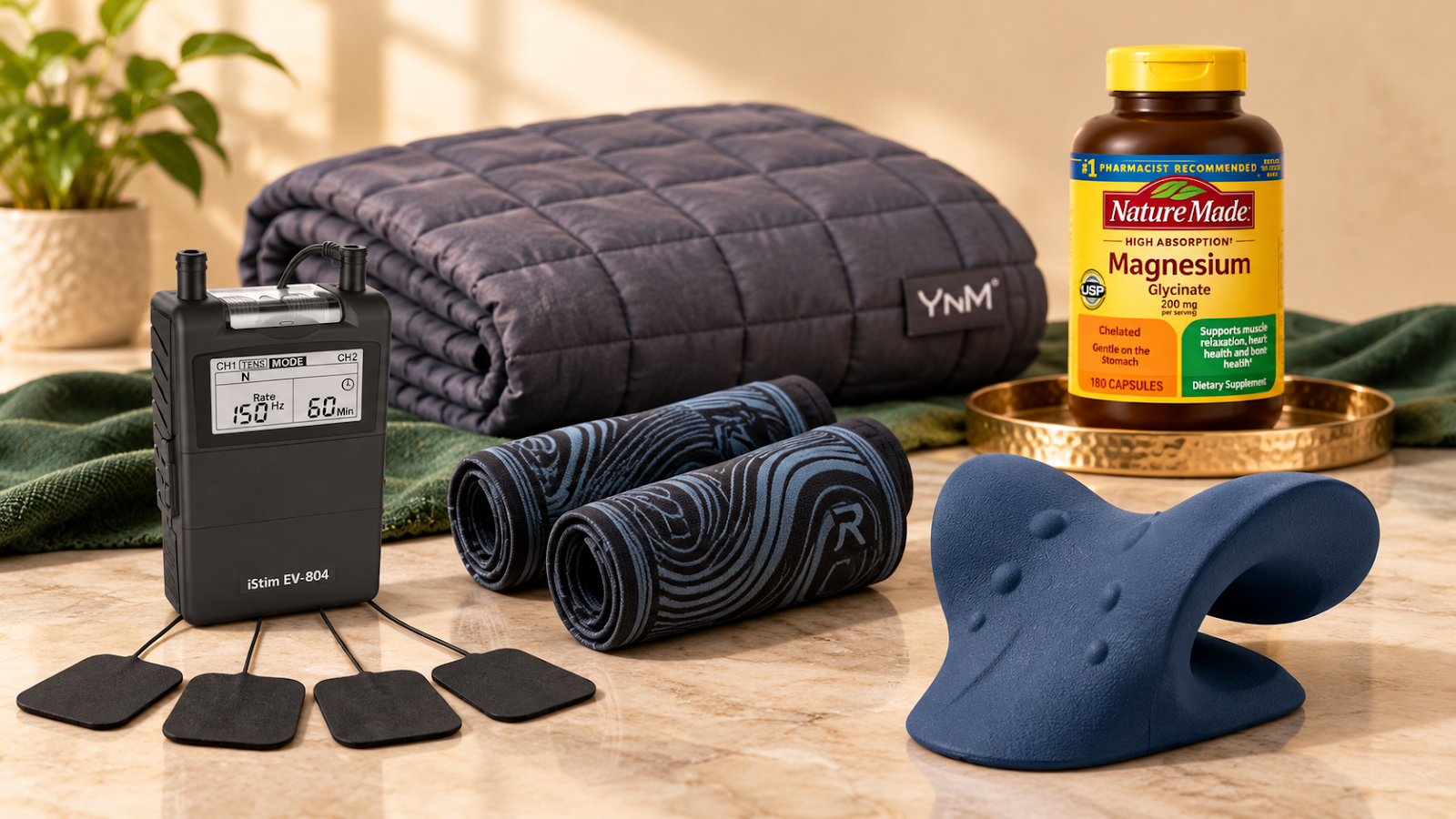
Best wellness products for pain relief and relaxation

Affiliate links: I may earn a commission at no cost to you. See our Affiliate Disclosure.

Product Guide

You want simple help at home for sore legs, a tight neck, an achy back, tired muscles, and restless sleep. You do not want five tools that do the same job, or a long routine you will drop in a week.

The best wellness products for pain relief and relaxation (2026) share one trait: each one fits a clear need, and each one is easy to start. This guide compares five picks side by side, so you can choose the one that matches your day, your body, and your space.

Best Wellness Products Featured Image

Fact-checked: 23 November 2026 — claims checked against published studies and product labels. Reviewed by the Health Rise editorial team.

How we review: We check the product label, published studies and real buyer reviews, and we list the pros and cons plainly. We do not claim hands-on testing we have not done. Read how we research: How We Research

Want the full story on our top pick? Read the YnM Weighted Blanket review.

Quick Overview

Best OverallYnM Weighted Blanket

Calm sleep at home

Best PremiumiSTIM EV-804 TENS/EMS Unit

Back and muscle sessions

Best BudgetCalf Compression Sleeves

Daily leg support

Best for Neck and Shoulder TensionRESTCLOUD Neck and Shoulder Relaxer

Short neck stretches

Best for BeginnersNature Made Magnesium Glycinate

Simple daily routine

How We Chose These

This list uses four checks that matter for at-home wellness. First, clear purpose: each product has one main job, from leg support to sleep comfort.

Second, ease of use: you can start it without a long setup or a new skill. Third, fit for daily life: size, weight, session length, and care needs must work in a normal home. Fourth, honest limits: each pick has a real con, and each one suits some people more than others.

The 5 Best Wellness Products for Pain Relief and Relaxation (2026)

YnM Weighted Blanket, 15lbs, 60x80 Inches, Queen Bed, Dark Grey

Product 01  Best Overall

YnM Weighted Blanket, 15lbs, 60×80 Inches, Queen Bed, Dark Grey

Best for: One adult who wants calm weight for rest at night.

This blanket is the top pick because it is simple. It measures 60 by 80 inches, weighs 15 lbs, and uses glass beads in small 2 by 2 inch compartments. The listed size suits one person of 140 lbs.

Pros

  • 15 lbs of glass-bead weight in 2 by 2 inch compartments
  • 16 loops hold a duvet cover in place
  • Machine washable on a gentle cycle

Cons

  • 15 lbs is heavy to lift and wash
  • 60 by 80 inch size suits one sleeper

Skip it if: You share a bed, or dislike heavy covers.

View Price & Details

iSTIM EV-804 TENS/EMS 2 Channel Rechargeable Combo Machine Unit

Product 02  Best Premium

iSTIM EV-804 TENS/EMS 2 Channel Rechargeable Combo Machine Unit

Best for: Adults who want adjustable back and muscle sessions.

This unit is the premium pick for control in one small device. It offers 2 channels, 7 modes, and 24 preset programs, with 5 TENS modes and 2 EMS modes.

The backlit display shows your settings. The set includes 8 pads, 2 lead wires, and a case.

Pros

  • 2 channels let you use up to 4 pads at once
  • 7 modes and 24 preset programs for varied sessions
  • Rechargeable battery, backlit display, and case

Cons

  • Pads and wires need care and replacement over time
  • Controls take a short learning period

Skip it if: You want a passive product with no wires.

View Price & Details

Calf Compression Sleeves for Men and Women - Sports, Running, Shin Splints

Product 03  Best Budget

Calf Compression Sleeves for Men and Women – Sports, Running, Shin Splints

Best for: Runners and workers on their feet all day.

These sleeves are the budget pick because they are simple fabric, with no battery and no charging. The listed blend is 54% nylon, 39% polyester, and 7% elastane, and sizes run from X-Small to 4X-Large. The footless design lets you wear your own socks or go barefoot.

Pros

  • Footless design works with your own socks or bare feet
  • Sizes from X-Small to 4X-Large for a close fit
  • Light fabric with no charging or setup

Cons

  • You must measure your calf for size
  • Sleeves cover one area only

Skip it if: You want full-leg cover, or help elsewhere.

View Price & Details

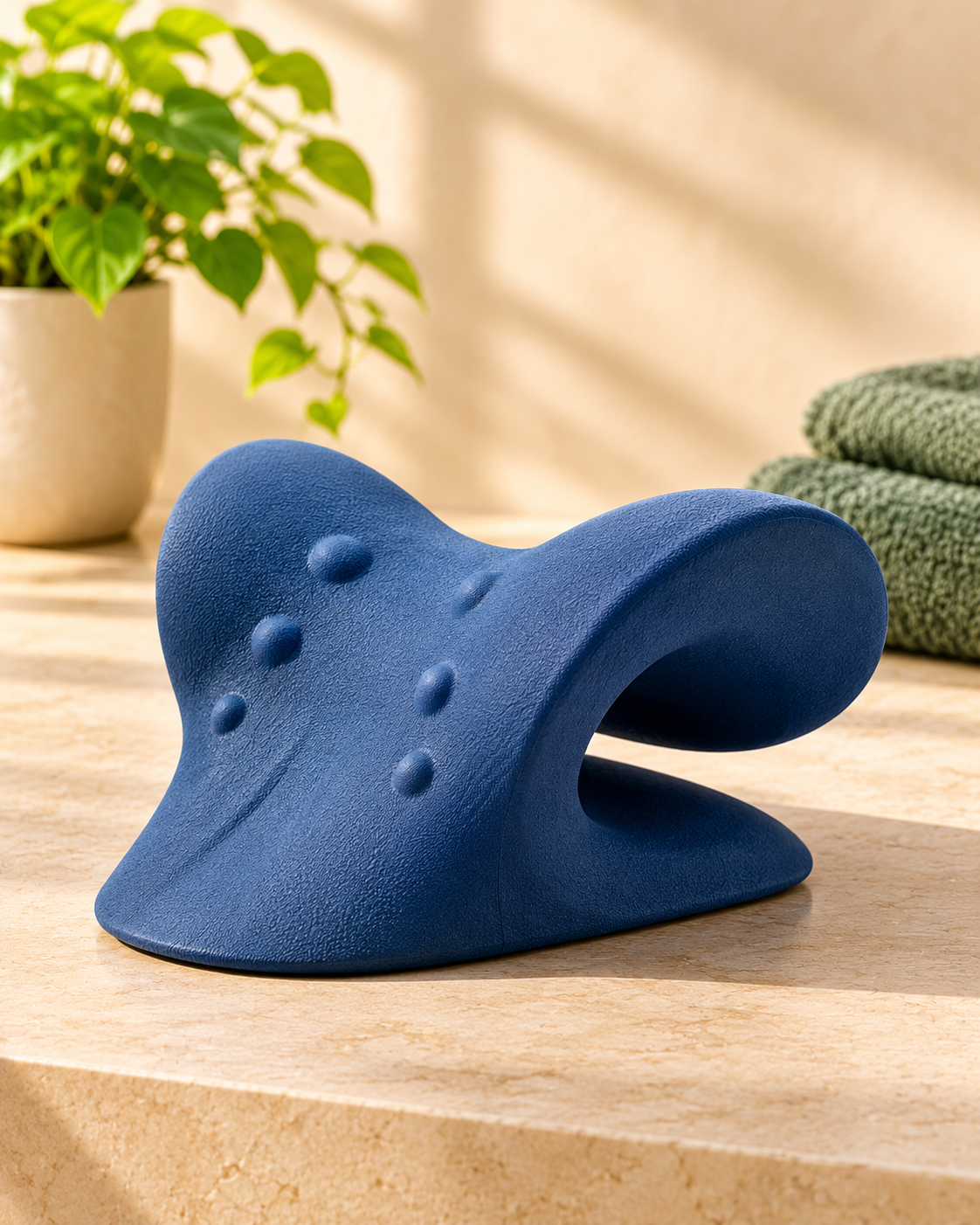
RESTCLOUD Neck and Shoulder Relaxer, Cervical Traction Device for TMJ Pain Relief and Cervical Spine Alignment, Chiropractic Pillow, Neck Stretcher (Dark Blue)

Product 04  Best for Neck and Shoulder Tension

RESTCLOUD Neck and Shoulder Relaxer, Cervical Traction Device for TMJ Pain Relief and Cervical Spine Alignment, Chiropractic Pillow, Neck Stretcher (Dark Blue)

Best for: Desk workers who want a short neck stretch.

This relaxer is the neck pick, with no power and no screen. The curved shape is designed to match the neck. The listed use is 10 minutes at a time, with no more than 30 minutes a day.

Pros

  • Curved shape is designed to support the neck curve
  • 10-minute sessions fit a short work break
  • Memory foam with raised nodes for gentle contact

Cons

  • Not an ordinary pillow, so no all-night use
  • First sessions may feel firm

Skip it if: You want all-night neck support.

View Price & Details

Nature Made Magnesium Glycinate 200 mg per Serving, 180 Capsules

Product 05  Best for Beginners

Nature Made Magnesium Glycinate 200 mg per Serving, 180 Capsules

Best for: Adults who want a simple daily capsule routine.

This bottle is the beginner pick because the routine is clear and short. Each serving is 2 capsules, and each serving gives 200 mg of magnesium as magnesium bisglycinate. The bottle holds 180 capsules, a 90-day supply at the listed serving.

Pros

  • 200 mg per serving in 2 capsules, 100 mg each
  • 180 capsules give a 90-day supply
  • Chelated form is designed to be gentle on the stomach

Cons

  • Daily use only, and not a fast-acting tool
  • Label care point: ask a clinician first if you take medication

Skip it if: You want same-day comfort, or take medication unchecked. Nature Made’s own store lists this product as Discontinued. Retail stock (e.g. Amazon) may still be available, check the retail label and expiry date before buying.

View Price & Details

Quick Buying Guide

Start with one problem, not with five products. Pick the body area that bothers you most, then match the tool to it. Check size and fit first for sleeves and blankets, and check session length for the neck relaxer and the TENS unit.

Read the label for the supplement, and note the serving, the supply, and the care points. A common mistake is to buy the most complex device first. A simple pick you use three times a week will serve you better than a full-featured device that stays in a drawer.

FAQ

Can I use more than one of these products in the same day?

Yes, pair them by time and body area. Use the sleeves by day, the neck relaxer for a short break, and the blanket at night.

Keep the supplement to its listed serving. Ask a clinician first if you have a health issue.

How do I pick the right weighted blanket weight?

Use the listed guide: the 15 lb size is listed for one person of 140 lbs. Heavier is not better for everyone. If you share a bed, pick a size made for two people.

Do I need the TENS unit if I already have the neck relaxer?

No, they serve different needs. The neck relaxer is a passive, short stretch with no power and no pads. The TENS unit is an active device with pads and programs for back and muscles.

Final Verdict

The YnM Weighted Blanket is the top pick for most readers. It is simple, it needs no setup, and it fits a nightly routine for calm rest.

If you want adjustable sessions for back and muscle areas, pick the iSTIM EV-804. If you run, walk, or stand all day, pick the calf sleeves.

If your neck feels tight after screen time, pick the RESTCLOUD relaxer. If you want the simplest daily habit, pick the Nature Made magnesium glycinate.

View Price & Details

Best Time to Take Vitamin D: Morning or Night? The Meal Matters More Than the Clock

Vitamin D bottle beside a salmon dinner plate: best time to take vitamin d

Last updated: 19 November 2026

Quick Answer

The best time to take vitamin D is with your largest meal, not at a set hour. Vitamin D needs fat to be absorbed, and one study found levels peaked 32% higher with a meal. Morning or night matters far less than food, and if evening doses disturb your sleep, move the dose to breakfast for two weeks and compare.

Vitamin D bottle beside a breakfast plate with eggs and avocado: best time to take vitamin d

Key Takeaways

Take vitamin D with your largest meal that contains some fat, not at a fixed hour.

One study found levels peaked about 32% higher with a fat-containing meal, but the long-term difference is unproven.

Morning or night has never been compared in a trial, so neither is proven better.

Food helps the dose get in. It does not promise a higher level months later.

If evening doses disturb your sleep, move the dose to breakfast for two weeks and compare.

Picture this: a bottle of vitamin D sits on your bedside table. Every night you swallow one with a glass of water, on an empty stomach, because night feels like the right time. Months later your blood test barely moves, and you wonder if the supplement is useless.

You are not alone. The best time to take vitamin D is a much-searched supplement question, and the answers online split into two camps: take it in the morning, or take it at night. Both sound sure. Neither camp tells you the part that matters most.

This guide looks at what the studies actually compared, including one honest twist most articles leave out, and ends with a decision tree so you can pick your time in one minute.

Best Time to Take Vitamin D: The Meal Matters More Than the Clock

Take vitamin D with the largest meal of your day, as long as it contains some fat. That choice matters more than morning or night, because vitamin D is fat-soluble and needs dietary fat to be absorbed.

Healthline and Wellgard often quote one study that makes the point clearly. Dawson-Hughes and colleagues gave 50 older adults a single 50,000 IU dose of vitamin D3, and the peak level in blood was about 32% higher with a fat-containing meal than with a fat-free meal. The meal was the difference, not the hour.

A smaller study points the same way. Mulligan and Licata followed 17 patients whose vitamin D levels would not rise. After the patients switched to the largest meal, blood 25(OH)D, the stored form that blood tests measure, rose by about 50% over two to three months. The group was small and had no control group, so this is a strong hint, not proof, and the next section explains why that caution matters.

A moderate amount of fat is enough. In a later trial, a moderate-fat meal worked as well as a fattier one, so there is no need to add extra fat on purpose.

In practice, the rule is simple: look at your day, find the largest meal with some fat in it, and take the dose with that meal. Eggs and butter at breakfast count. Olive oil on a salad counts. Oily fish at dinner counts. A glass of water and an empty stomach does not.

Vitamin D softgel on avocado beside olive oil, egg and almonds

The 90-Day Twist: Why the Meal Effect May Not Change Your Level

Food helps one dose get in, but it has not been shown to raise your stored level months later. That is the twist most articles miss.

Dawson-Hughes and colleagues tested the long view. In a 2013 study, 62 older adults took a monthly 50,000 IU dose for 90 days, and their 25(OH)D levels at 30 and 90 days did not differ between the no-meal, low-fat and high-fat groups. The meal helped one dose peak higher, but over three months the stored level landed in the same place.

A second study agrees. Cavalier and colleagues ran an 88-person crossover trial and found no significant difference in 25(OH)D between fasting and fed conditions over 60 days. Two studies, two designs, one message: the meal effect shows up in peak absorption, not in long-term stored levels.

So the honest line is this: taking vitamin D with food is still worth doing, because it helps the dose get absorbed and costs nothing, but food alone is not proven to fix a low level over months. If your level stays low, see your clinician for a blood test, not a different meal.

Calendar with a vitamin D bottle and glass of water on dark stone

Best Time to Take Vitamin D for Sleep: Morning or Night?

No trial has tested morning dosing against night dosing for sleep, so neither time is proven better for sleep. If your sleep is fine, there is no reason to change it. If evening doses disturb your sleep, move the dose to breakfast for two weeks and compare.

The sleep evidence itself is mixed. A 2021 review by Huiberts and Smolders found mixed results for both sleep and mood. A 2022 review of five trials found vitamin D improved sleep quality, while a second 2022 review found the picture mixed, with better sleep tied more to correcting a deficiency than to the hour of the dose. Low levels are also linked to poorer sleep, which means a deficiency may be the sleep problem, not the supplement.

Dose matters too. Golan and colleagues found that 4,370 IU a day lowered nighttime melatonin after three months in people with multiple sclerosis, while 800 IU a day did not. That was a high dose in one group, so do not read it as a warning about ordinary doses.

A smaller group reports the opposite: drowsiness after a dose, especially a large one. If that happens to you, moving the dose to the morning may help.

The practical rule is a two-week self-test. Move the dose to your morning meal, keep everything else the same, and note how you sleep. If nothing changes, the dose was never the problem. For sleep basics beside this question, see how long melatonin takes to kick in.

Do not swap a fatty dinner dose for a fat-free breakfast dose out of sleep worry. That trades a proven absorption benefit for an unproven risk, so move the dose only if your sleep actually gets worse.

Vitamin D bottle on a bedside table beside a small clock in morning light

The Decision Tree: Pick Your Time in One Minute

Find your biggest meal with fat in it, and anchor your dose there.

Your biggest mealTake vitamin D thenWhy it works
Breakfast with eggs, butter or full-fat yogurtWith breakfastFat helps absorption
Lunch, your largest meal, with olive oil or cheeseWith lunchSame rule, and midday keeps nights clear
Dinner with meat, fish or oilWith dinnerFat helps absorption; move it earlier if sleep suffers
No clear largest mealWith whichever meal has some fatThe fat matters, not the hour
You skip breakfast or fast until noonWith your first meal of the day, whenever that isA fasted capsule with only black coffee is the weakest option

If your meals change day to day, pick the meal you eat most reliably. A steady habit beats a perfect hour you forget.

What Most People Get Wrong About Vitamin D Timing

The most common mistake is chasing the perfect hour while taking the dose on an empty stomach. The hour is the least important part.

  1. Taking it at bedtime on an empty stomach. The bedside-table habit feels tidy, but a capsule swallowed hours after dinner behaves like a fasted dose, and water alone gives it no fat to travel with. Move it to a meal.
  2. Believing morning is proven best. No trial has compared a morning dose with an evening dose, as Wellgard and Healthline state, so morning is a preference, not a finding.
  3. Doubling up after a missed dose. The NHS advises never taking two doses at once. Take the missed dose with your next meal and carry on.
  4. Expecting levels to move in days. 25(OH)D has a half-life of two to three weeks, according to NICE, so a blood test before eight to twelve weeks says little.
  5. Blaming vitamin D for every bad night. Night waking has many causes, and low vitamin D is only one. If you wake at the same hour most nights, read why you wake up at 3 a.m. every night before changing your dose time.

Missed a Dose? How Long Before Your Level Moves

Take the missed dose with your next meal and carry on, never taking two at once. Your stored level moves over weeks, so one missed dose changes little.

How long it takes is the part people underestimate. 25(OH)D, the stored form, has a half-life of two to three weeks, according to NICE, and a first follow-up blood test is not useful before eight to twelve weeks. One dose is absorbed in hours, but the stored level climbs slowly.

The form does not change the timing. D2 and D3 have no timing difference, and while D3 raises 25(OH)D slightly more in some meta-analyses, the UK Scientific Advisory Committee on Nutrition stated in 2024 that both forms prevent and treat deficiency.

The enzymes that activate vitamin D need magnesium, so getting enough magnesium from food matters. Vitamin K2 is often sold with vitamin D, but no mainstream body calls extra K2 a requirement.

Some medicines need a gap. If you take orlistat, a weight-loss medicine, the NHS advises taking vitamin D at least two hours after orlistat, or at bedtime. Levothyroxine, a thyroid medicine, and iron supplements should stay on their own schedule, often several hours apart. If you take other medicines, ask your pharmacist about timing before you change anything.

Safety Box

A short note on safety: vitamin D is a supplement, and too much of it can be harmful, so stay within the daily ceiling on your label or the one your clinician gives you. The NHS puts the adult ceiling at 100 micrograms, or 4,000 IU, a day. If you are pregnant, take other medicines, or have a health condition, talk with a doctor or pharmacist first.

People Also Ask

Can I take vitamin D at night?

Yes. No trial has found night dosing harmful, and none has compared night with morning dosing. Take it with your evening meal, not on an empty stomach at bedtime. If your sleep gets worse after evening doses, move the dose to breakfast for two weeks and compare.

Should you take vitamin D with food?

Yes, with a meal with some fat. Vitamin D needs dietary fat to be absorbed. In one study of 50 older adults, levels peaked about 32% higher with a fat-containing meal, according to Healthline. The catch: studies found no difference in levels after 60 to 90 days, so food helps the dose get in without promising a higher level later.

Does vitamin D affect sleep?

The evidence is mixed. A 2022 review of five trials found supplementation improved sleep quality, while a 2021 review found the evidence mixed. Low levels also link to poor sleep. No trial has tested morning against night dosing for sleep, so try moving the dose to breakfast for two weeks and compare.

Vitamin D morning or night?

Neither is proven better: no trial has compared morning with evening dosing. Healthline and Wellgard both state that research has not established a best time. Choose by your meal: take the dose with a meal that contains some fat, and keep the time steady. If evening doses disturb your sleep, move the dose to breakfast for two weeks.

How long does vitamin D take to work?

Absorption is fast, but levels move slowly. The stored form, 25(OH)D, has a half-life of two to three weeks, according to NICE, so a blood test is not due before eight to twelve weeks. A dose with a fat-containing meal peaks higher within hours, yet the level your test measures climbs over weeks. Give timing a month before judging it.

Conclusion

The best time to take vitamin D is the time you will keep, with your largest meal that contains some fat. The studies agree on food and disagree on nothing else, because morning and night were never compared head to head. Pick your biggest meal, anchor the dose there, and give it two weeks before judging sleep. If your level stays low, the answer is a blood test and a clinician, not a different hour. Your next step takes one minute: look at tomorrow’s meals and choose your largest meal with some fat in it.