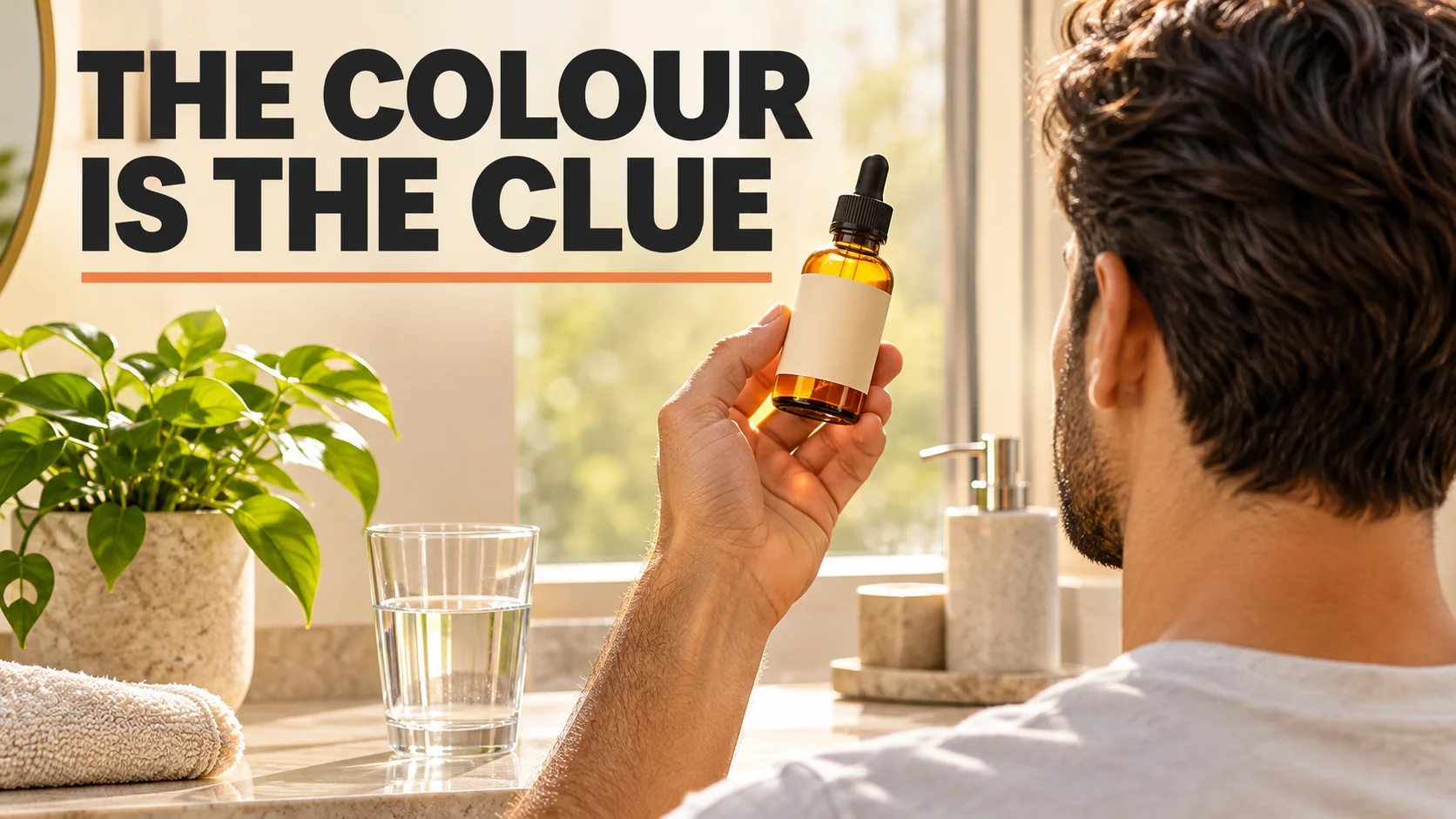
Quick Answer
Why does vitamin c serum turn yellow? Because its active ingredient, L-ascorbic acid, reacts with oxygen, light and heat. That reaction, called oxidation, changes the serum from clear to yellow, then orange, then brown as it loses strength. Light yellow is fine, but once it turns orange or brown, it has lost its brightening power and should be replaced.

Key Takeaways
Yellow means oxidation: oxygen, light and heat turn L-ascorbic acid into DHAA, then into compounds with no antioxidant power.
The colour ladder decides: clear to pale yellow is fresh, light yellow is early oxidation and still works, orange is degraded, brown means the benefit is gone.
The change matters more than the colour: a serum that arrived pale yellow and stayed pale yellow is different from one that turned orange in a month.
Storage slows it: cap on tight, cool and dark, use within 3 to 6 months of opening; refrigeration helps but cannot restore lost strength.
You open a new bottle of vitamin C serum and the liquid inside is clear. Three weeks later you pick it up again and it is yellow. A month after that, it is orange. Nothing else changed, so you wonder whether it went bad, whether it is still safe, and whether you wasted your money. The short answer is that the colour is telling you the truth about what is happening inside the bottle. Vitamin C is a strong antioxidant, and the same strength that brightens your skin also makes it react with air, light and heat. That reaction has a name, oxidation, and it follows a clear pattern you can read like a traffic light. This guide explains that pattern, stage by stage, so you can decide when a yellow serum is still fine, when it is time to replace it, and how to make the next bottle last longer.
What Oxidation Actually Does to Your Serum
The active ingredient in most vitamin C serums is L-ascorbic acid, the purest and most studied form of vitamin C. It works by donating electrons, which is exactly how it fights the free radicals that dull your skin. The trouble is that it donates those electrons to oxygen in the air just as easily. Every time you open the bottle, oxygen gets in. Light and heat speed the reaction up. The L-ascorbic acid first becomes dehydroascorbic acid, known as DHAA, and that change is what turns the liquid yellow. DHAA still has some activity, but it is weaker. Left longer, DHAA breaks down further into compounds with no antioxidant activity at all, and the colour deepens to orange, then brown. The serum is not rotting. It is simply spending its power on the air instead of on your skin.
The Colour Ladder: Why Does Vitamin C Serum Turn Yellow in Stages
Think of the colour as a fuel gauge. Clear to very pale yellow means the serum is fresh and full strength. Light to medium yellow means early oxidation has started; the serum still works, but you should use it up soon rather than saving it. Amber or orange means the vitamin C has degraded a long way, and most of the brightening benefit is gone. Brown means the antioxidant benefit is essentially finished, and the bottle should be replaced. The ladder matters because the fix is different at each stage. A light yellow serum is a hurry-up signal, not a throw-it-away signal. An orange or brown serum is a replace-it signal, because you are no longer getting what you paid for.

Yellow From Day One, or Yellow That Appeared Later?
Not every yellow serum is oxidised. Some formulas arrive faintly yellow on day one, because the other ingredients in the bottle add a little colour, and they stay that shade for months. That is normal. If you want to know why does vitamin c serum turn yellow in your bottle, compare the liquid today with how it looked when you opened it. Clear when opened and orange within a month means an unstable formula or bad storage, not a batch to keep using. Pale yellow on day one and still pale yellow after two months means the formula is holding up. The test is simple: watch the direction, not the colour alone. A serum that keeps moving darker is losing strength, and a serum that stays steady is doing its job.
Is It Still Safe to Use?
An oxidised serum is generally not dangerous to apply, but that is the wrong question. The real question is whether it still does anything. A light yellow serum is still safe and still useful, so finish it. An orange or brown serum is unlikely to harm your skin, but it delivers little to no brightening or antioxidant benefit, so you are spreading coloured water on your face. There is one more cost: heavy oxidation can leave a temporary yellow-orange cast on the skin and stain pillowcases and collars. Stop using a serum and get checked if it irritates your skin, causes a rash, or changes in smell or texture, because those are signs of something more than oxidation. And if the serum leaves small bumps behind, the cause may not be the vitamin C at all. Our guide to why closed comedones appear only on the forehead explains how clogged pores form and what to do about them.
Why Does Vitamin C Serum Turn Yellow Faster in Some Bottles?
Five things decide the speed. First, the form: pure L-ascorbic acid is the most reactive, while stable derivatives such as sodium ascorbyl phosphate and ascorbyl glucoside resist oxidation much better. Second, the concentration: higher percentages oxidise faster because there is more active ingredient to react. Third, the pH: L-ascorbic acid needs a low pH to work, and that acidity makes it more reactive. Fourth, the packaging: a clear bottle lets light in, a wide opening lets air in, and a dropper pulls fresh oxygen into the bottle every time it is used. Opaque, airless pump packaging slows all of that down. Fifth, your storage: a sunny windowsill or a steamy bathroom shelf is the fastest way to yellow a bottle. Heat and humidity are the quiet drivers most people never notice.
How to Slow It Down, and What to Look for in the Next Bottle
Three habits make the biggest difference. Keep the cap on tight, because oxygen is the main driver of oxidation. Keep the bottle away from light and heat, in a cool, dark place, not on a sunny windowsill or a steamy bathroom shelf. And use the serum within 3 to 6 months of opening, because even perfect storage cannot stop oxidation forever. Refrigeration slows further breakdown, but it cannot restore strength that is already lost. That is why the question of why does vitamin c serum turn yellow has no permanent fix: vitamin C is reactive by design, and the best you can do is slow it down, not stop it. When you buy the next bottle, read the label first. A stable derivative will yellow more slowly than pure L-ascorbic acid, and opaque or airless packaging is worth paying for. If you also use retinol, keep the two routines separate at first. Our guide to retinol purging vs irritation explains what normal adjustment looks like and what is a warning sign.


Safety Box
Stop using the serum and talk to a doctor or pharmacist if it causes a rash, swelling, or irritation that does not fade, or if it changes in smell or texture. Do not use it on broken or sunburned skin, and keep it away from your eyes. A patch test on the inside of your arm is a simple first step with any new bottle.
People Also Ask About Why Does Vitamin C Serum Turn Yellow?
Can I still use vitamin C serum if it turned yellow?
Yes, if it is light yellow. A light yellow serum has started to oxidise but still works, so use it up and store it properly. Once it turns orange or brown, most of the vitamin C has broken down and the serum will do little for your skin, so it is time to replace it rather than keep using it.
How long does vitamin C serum last after opening?
Most L-ascorbic acid serums are at their best for 3 to 6 months after opening, depending on the formula and how you store it. Keep the cap tight and the bottle cool and dark to stretch that window. If the colour moves from clear to orange within a month, the formula or the storage is the problem, not the calendar.
Does yellow vitamin C serum stain skin or clothes?
A heavily oxidised serum can leave a temporary yellow-orange cast on the skin, and it can stain pillowcases and light collars. The stain usually washes out of skin with a normal cleanser, but fabric stains can linger. This is one more reason to replace an orange or brown serum instead of finishing it.
Should I keep vitamin C serum in the fridge?
Refrigeration can help. A cool, dark fridge slows oxidation and keeps the serum fresher for longer, especially in a warm climate. It will not restore strength that is already lost, and it does not replace a tight cap and a dark bottle. If your bathroom gets hot and steamy, the fridge is a better home for the bottle.
What is the difference between L-ascorbic acid and a vitamin C derivative?
L-ascorbic acid is the purest form of vitamin C and the most studied, but it is also the most reactive, so it yellows fastest. Derivatives such as sodium ascorbyl phosphate and ascorbyl glucoside are gentler and far more stable, so they yellow slowly. The trade-off is that derivatives are usually weaker, though they are often better for sensitive skin.
Conclusion
Vitamin C is reactive by design: it gives up its strength to oxygen, light and heat, and the colour shows how far that process has gone. Light yellow means use it up soon. Orange or brown means the benefit is gone and the bottle should be replaced. The fix is a better habit: cap on tight, cool and dark, and finished within 3 to 6 months. And when you ask why does vitamin c serum turn yellow, remember the baseline test. A bottle that stayed steady is doing its job, and a bottle that raced to orange was a storage warning.
Sources
The INKEY List, How to Store Vitamin C Serum; Paula’s Choice Singapore, Is Your Vitamin C Serum Oxidized?; Vegalab, Vitamin C Serum: Morning or Night? (citing Indian Dermatology Online Journal, 2013 review); The Culture Mom, Best Vitamin C Serum.
This article is for general information only and is not medical advice.