Health Rise

The Secret Oil Behind Soft Skin (87,000+ Reviews)

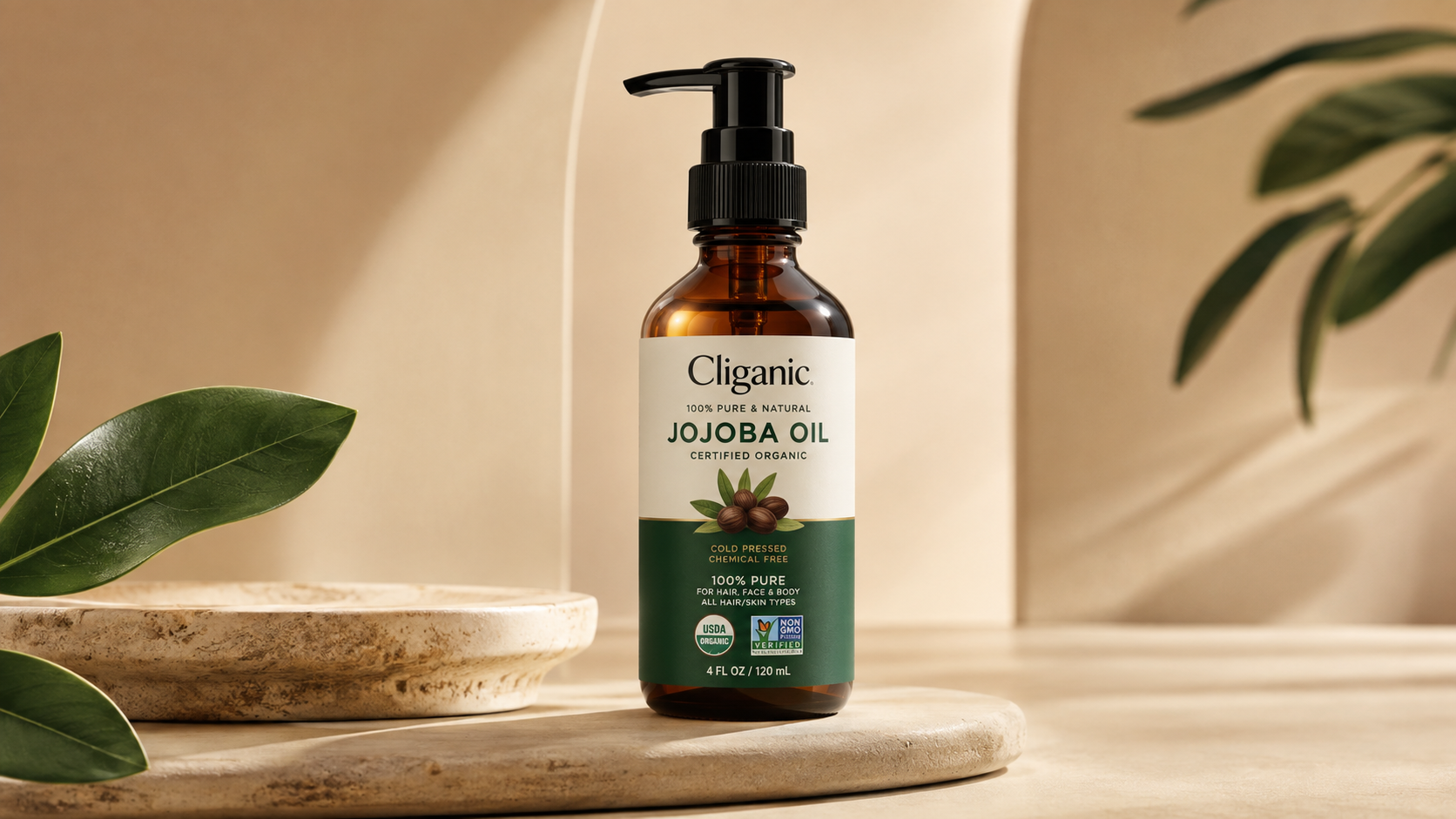
The Secret Oil Behind Soft Skin (87,000+ Reviews) The featured product is Cliganic Organic Jojoba Oil, 100% Pure.
Could One Simple Plant Oil Be Enough for Dry Skin and Hair?
Bestseller
Cliganic Organic Jojoba Oil

COULD ONE SIMPLE PLANT OIL BE ENOUGH FOR DRY SKIN AND HAIR?

Shop Now →

Dry skin often does not need a complicated routine. Sometimes the bigger challenge is finding a simple product that softens rough areas without leaving an unpleasant heavy feeling. Jojoba oil has become popular for this reason.

Jojoba is technically a liquid wax rather than a conventional vegetable oil. Its composition is dominated by wax esters, which give it a structure that is useful in cosmetic formulations.

The evidence is promising, but expectations should stay realistic. Research on jojoba includes reviews, laboratory models, smaller studies, and cosmetic formulations rather than a large body of clinical trials proving dramatic results for everyone.

4.7
Star Rating
87,380
Ratings
100%
Pure
4
Key Qualities

The featured product is Cliganic Organic Jojoba Oil, 100% Pure. The provided product information describes it as organic, cold-pressed, hexane-free, and unrefined.

🌿
Organic
The provided product information identifies the jojoba oil as organic.
💧
Cold-Pressed
The product information describes the oil as cold-pressed.
🧴
Hexane-Free
The supplied product details describe the oil as hexane-free.
Unrefined
The provided listing information describes the jojoba oil as unrefined.

The supplied product information presents jojoba oil as a multipurpose cosmetic oil for skin, hair, and nails.

1
For Skin
Use a small amount on slightly damp skin after showering.
2
For Hair
Use sparingly on lengths or ends when the goal is to add softness and reduce the appearance of dryness or frizz.
3
Start Small
More oil is not necessarily better. Start with a small amount and adjust according to how your skin and hair respond.

The provided product listing carries a 4.7-star rating from 87,380 ratings, representing a substantial amount of customer feedback.

Across the supplied reviews, buyers repeatedly highlighted moisture, softness, lightweight application, versatility, and easy use.

Several customer experiences described the oil as useful for dry-feeling skin and hair, while others praised its ability to spread easily and said only a small amount was needed.

Some buyers also described using it as part of hair-care routines, including for lengths, ends, detangling, and scalp care.

review snapshot

★★★★★
4.7
Based on 87,380 ratings
5★
83%
4★
11%
3★
4%
2★
1%
1★
1%
Affiliate Disclosure: This page contains an affiliate link. If you make a purchase through the link, a commission may be earned at no additional cost to you.

Hydrocolloid Acne Patches: How They Work and Why They Help


Skincare Science

A closer look at hydrocolloid acne patches, how they draw out pimple fluid overnight, and what makes a quality patch worth adding to your routine.

Hydrocolloid Acne Patches: How They Work and Why They Help


What It Is

A drug-free adhesive sticker that absorbs fluid from surface-level pimples while forming a protective barrier.


How It Works

Draws out fluid through moisture absorption and prevents picking, which reduces scarring risk.


Best For

Whiteheads, pustules, and popped pimples. Not effective for cystic acne or blackheads.


Evidence Level

Supported by decades of wound-care research and emerging acne-specific clinical trials.

A stubborn pimple has a way of showing up at the worst possible time. Somewhere between picking at it and hiding it under a hat, most people eventually stumble onto the small, clear sticker that dermatology offices have used for decades: the hydrocolloid patch. Over the past few years, these patches have moved from wound care shelves to skincare routines everywhere, and for good reason.

They are simple, drug-free, and designed to do one job well: calm down a surface-level breakout while you sleep. This guide breaks down what hydrocolloid patches actually are, how they work on the skin, what the research says, and what to look for if you are considering adding one to your nightly routine.

What a Hydrocolloid Patch Is

Hydrocolloid patches are small adhesive stickers made from a gel-forming material originally developed for wound dressings in the early 1980s. Before they became a skincare staple, hospitals and clinics used the same material to help cuts, blisters, and pressure sores heal faster by keeping the area clean and moist.

Skincare brands eventually adapted the technology into thin, circular patches sized for a single blemish. The patch itself contains no medication. It works purely through its physical properties, absorbing surface fluid and creating a protective barrier over the spot.

How It Works

When a pimple has come to a head, whether it is a whitehead, a pustule, or a spot that has already been popped, there is usually some fluid or debris sitting near the surface of the skin. A hydrocolloid patch is designed to draw that fluid into its gel layer through a process called moisture absorption.

As the patch pulls in fluid, it can visibly thicken and turn a cloudy white color, a sign that it is doing its job. At the same time, the patch forms a physical seal over the area. That seal keeps out bacteria, dust, and makeup, and just as importantly, it keeps fingers away from the blemish. A lot of acne scarring and prolonged healing comes from picking, so simply covering the spot can make a meaningful difference on its own.

1

Clean the Skin

Gently cleanse and dry the area so the patch adheres properly to the blemish.

2

Apply the Patch

Peel and place the patch directly over the whitehead or pustule, pressing edges firmly.

3

Wait 6–8 Hours

Leave it on overnight or through the day while the gel layer absorbs fluid from the spot.

4

Peel & Observe

Remove gently. The patch may appear cloudy — that is the absorbed fluid. Skin looks calmer.


Why People Use Them

Most people reach for a pimple patch the night before something important, whether that is a work presentation, a first date, or just wanting to wake up with calmer skin. Others use them as part of a regular routine, applying a patch any time a new blemish shows up rather than waiting to see how it develops.

Because the patches are unmedicated, they also appeal to people who want to avoid the dryness or irritation that can come with stronger acne treatments, or who simply want an easy, low-commitment option to keep on hand.

What the Research Actually Shows

The strongest evidence for hydrocolloid dressings comes from decades of general wound care research, where they are well documented for helping minor wounds heal by maintaining a moist environment and reducing scab formation. Applying that same material specifically to facial acne is a newer area of study, but the early results are encouraging.

Clinical Trial

Journal of the American Academy of Dermatology, 2024

“Patches significantly improved the appearance of popped pimples within the first few days, including reductions in redness, size, and scabbing, compared with a simple skincare routine alone.”

Randomized controlled trial following 41 people with inflammatory acne lesions over 14 days.

Randomized Study

Peer-Reviewed Dermatology Research

“Hydrocolloid dressings produced a statistically greater reduction in acne severity and inflammation over three to seven days than standard skin tape.”

Randomized, double-blind comparative study.

What researchers do not yet have is large-scale, long-term data comparing hydrocolloid patches directly against medicated acne treatments, or clear evidence on how much of the visible improvement comes from the absorption itself versus simply protecting the area from touching and picking. A broader review of hydrocolloid dressings in dermatology described the acne-specific research as promising but still early, noting that more clinical studies are needed even as real-world use continues to grow.

Benefits and Limitations

The clearest benefit is a faster, calmer appearance for surface-level blemishes, especially whiteheads, pustules, and spots that have already been disrupted. Patches also physically block picking, which on its own can reduce the risk of scarring. The limitation is scope.

Benefits

  • Drug-free and gentle on skin
  • Absorbs fluid from whiteheads overnight
  • Forms a protective barrier against bacteria
  • Prevents picking and reduces scarring risk
  • Easy to use with no learning curve

Limitations

  • Not effective for deep cystic or nodular acne
  • Will not dissolve blackheads
  • Only works on surface-level lesions
  • May lift off sooner on very oily skin
  • Not a cure for underlying acne causes

Types and Formats

Patches typically come in a few different sizes within the same box, so a single sheet can usually handle everything from a small blemish to a larger inflamed spot. Some versions use a slightly thicker gel core for spots with more visible fluid, while ultra-thin versions are designed to sit invisibly under makeup during the day. None of these variations change the core mechanism. The differences mostly come down to coverage size and how noticeable the patch is once applied.

How to Choose a Quality Patch

Not all hydrocolloid patches are built the same, so a few details are worth checking before buying:

  • Look for patches that are labeled hypoallergenic and free of unnecessary fragrance, since facial skin tends to be more sensitive than other areas of the body.
  • Check that the patches come individually sized within the box rather than one uniform size, which gives more flexibility for different blemish types.
  • Dermatological testing claims are worth looking for, along with a clear ingredient or material list rather than vague marketing language.
  • Consider value per patch rather than just the price on the box, since a lower per-unit cost matters more if you are using them regularly.

Things to Know Before You Buy

Hydrocolloid patches are generally well tolerated because they contain no active medication. The most common issue reported is mild adhesive sensitivity, similar to what some people experience with any bandage, which can usually be avoided by choosing a hypoallergenic formula.

Patches are meant for intact or lightly broken skin, not open wounds or infected lesions that need medical attention. If a spot looks unusually large, painful, or does not improve after several days, it is worth checking in with a dermatologist rather than relying on a patch alone.

Medical Note

If a blemish is painful, spreading, or not improving after several days, consult a dermatologist rather than relying on a patch alone. Patches are for surface-level blemishes only.

Why This Product Stands Out

Among the hydrocolloid options on the market, the Hero Mighty Patch line has become one of the most recognized for a reason. Each box includes a range of patch sizes on a single sheet, so smaller blemishes and larger ones can both be covered without needing a second product.

Editor’s Pick

Hero Mighty Patch

The patches are drug-free and dermatologically tested, which fits well for anyone who wants a straightforward, no-frills option rather than a multi-step treatment. It is not the only well-made patch available, and people with very sensitive skin may want to patch test first, but it is a solid, no-nonsense pick for anyone starting out with hydrocolloid patches.

Drug-free formula
Dermatologically tested
Multiple sizes per box
Barely visible under makeup

What Customers Are Saying

Beyond the clinical research, real-world feedback from verified buyers tends to echo the same themes. Effectiveness comes up most often, with many buyers describing visibly flatter, calmer spots within hours of overnight use, even on sensitive skin. Value for money is another recurring point, with several reviewers saying the patches feel worth the slightly higher price compared to cheaper alternatives, largely because they are barely visible once applied and hold up well under makeup.

The feedback is not universally perfect, which is worth mentioning honestly. A few buyers note that the patches come in a single size, which can feel a little large for smaller, more isolated blemishes. Others with oilier skin mention that a patch may lift off sooner than the advertised wear time. None of these comments point to safety concerns, mostly just fit and duration preferences that vary from person to person.


“I put one on before bed and by morning the whitehead was completely flat. I have sensitive skin and had zero irritation. These are now a permanent part of my routine.”

Verified Buyer
Confirmed Purchase
 

“Worth the price compared to cheaper brands. They actually stay on all night and are so thin I can wear them under makeup during the day without anyone noticing.”

Verified Buyer
Confirmed Purchase
 

“Good product overall. Works well on whiteheads but I found it lifts a bit early on my oily T-zone. Still, best patch I have tried so far.”

Verified Buyer
Confirmed Purchase

Real-World Buying Considerations

A single box typically lasts a while for occasional use, though anyone dealing with frequent breakouts may go through them faster. The patches are thin enough to wear overnight or, in some cases, under makeup during the day, which adds some flexibility depending on your routine. Because there is no learning curve involved, they tend to be an easy habit to stick with compared to more involved skincare steps.

Frequently Asked Questions

Most patches are designed to stay on for six to eight hours, which is why overnight use is common. Leaving it on longer generally will not cause harm, but the patch will start to lift once it has absorbed as much fluid as it can hold.

Thinner formats are often designed for daytime wear and can sit under makeup, though results vary depending on skin type and the specific patch.

No. Blackheads are hardened sebum plugs rather than fluid-filled lesions, so a hydrocolloid patch will not pull them out.

No. Patches can be used on both intact whiteheads and on spots that have already come to a head on their own.

Most people tolerate hydrocolloid patches well, but anyone with a history of adhesive sensitivity should look for a hypoallergenic formula and patch test on a small area first.

Some visible change is often noticeable by the next morning, though full improvement of a lesion can take a few days.

Yes, in most cases. Since the patch itself is unmedicated, it can typically be layered into an existing routine, though applying it directly over a freshly treated area with active ingredients is best avoided until the area has dried.

Conclusion

Hydrocolloid patches are not a cure for acne, but for the right kind of blemish, they are one of the simplest, lowest-risk tools available. The evidence so far, backed by both decades of wound-care research and newer acne-specific trials, points to real improvement in the appearance of surface-level pimples within days, along with the added benefit of keeping hands off the skin while it heals. For anyone dealing with the occasional stubborn breakout, a well-made patch like the Hero Mighty Patch is worth having on hand.

Medical Disclaimer

This article is for educational purposes only and is not a substitute for professional medical advice, diagnosis, or treatment. Always consult a dermatologist or qualified healthcare provider regarding any skin condition, especially if a blemish is painful, spreading, or not improving.

Affiliate Disclosure

This article may contain affiliate links. Product recommendations are based on independent research and editorial judgment, not sponsorship. If you make a purchase through a link on this page, AiRisePro may earn a small commission at no extra cost to you.

Ready to Try Hydrocolloid Patches?

Start with a trusted, dermatologist-tested option that thousands of reviewers rely on for calmer skin overnight.

Shop Now